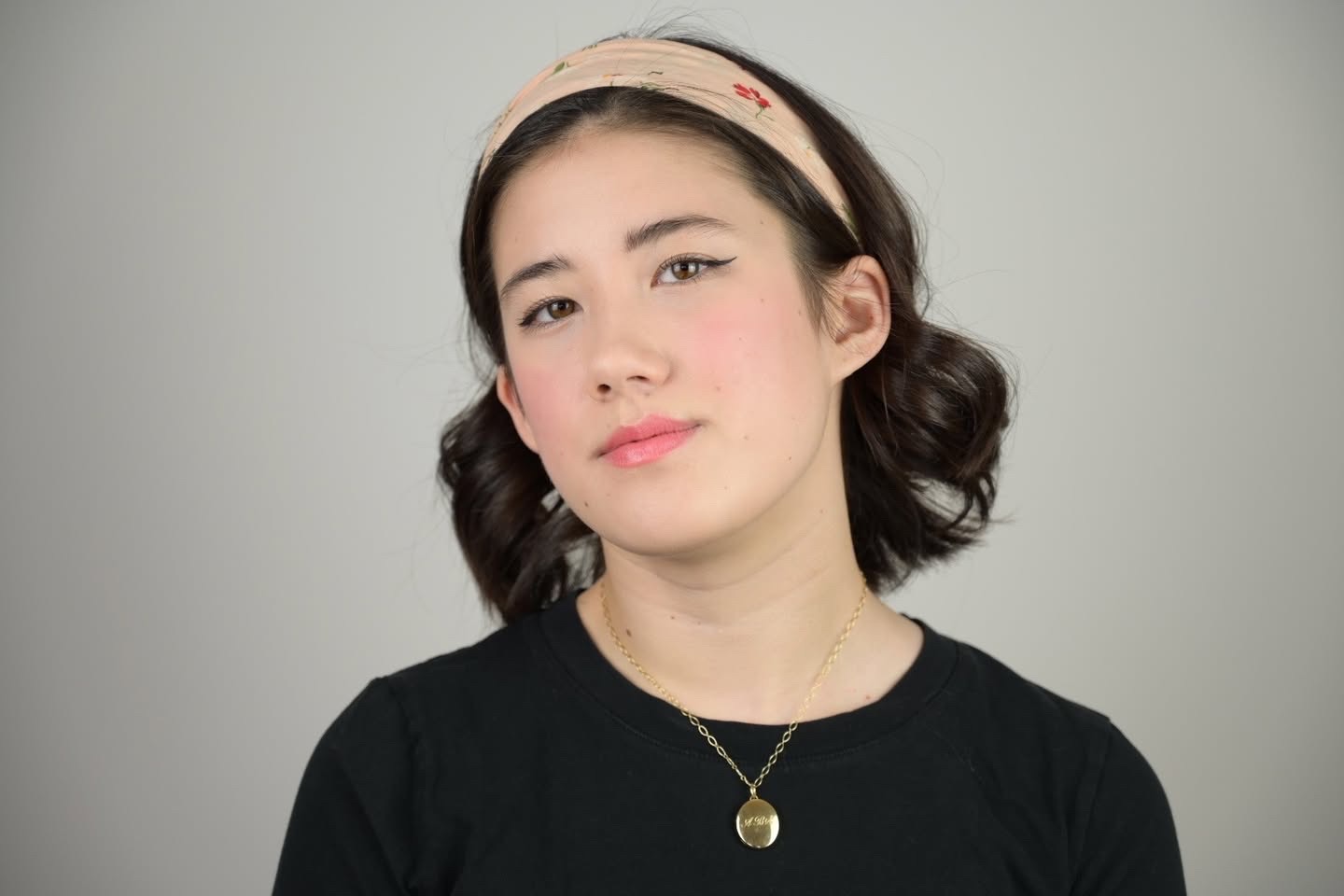
You have exciting news to share. Care to share?
My first short film that I made, that I wrote, directed, edited, acted in… I kind of went crazy, it got into the Big Apple Film Festival Student Showcase. It’s also really cool because this is the first year that they’re doing a student showcase version. And even though it’s not, like, part of the main big festival, it’s still kind of neat, because this is one of seven short films, and it is a one-night thing. I got to do a Q&A after my film, and it’s, yeah, that’s my big news!
Is this your first time having a film selected for a film festival? How does it feel?
This is the first short film I’ve ever made. It’s very exciting, very fun, because I didn’t really, looking back on it now, I’m realizing that it really shouldn’t have gotten selected for anything, because it’s a long, it’s like 22 minutes long. And so for a student short, that takes up so much time, like two to three slots, that there was a very small chance that I would have gotten selected. And it’s not a traditional short film in the sense of choosing one theme, like love or depression or loss, and sticking with that. It’s very much a story with those undertones, but that’s not the main point. And so I’m very pleasantly surprised that I got selected.
How did you come about this opportunity?
I scoured Film Freeway. I looked up “student” in their search bar, and just kind of went through. I knew somebody who had gotten their film into the Big Apple Film Festival. So, I was like, “Oh! Maybe I should submit to their student showcase!” Because I feel like I have a bigger chance of that than a professional-level film festival. So that’s how I found it!
Is Film Freeway your main place to look for these opportunities?
Film Freeway is the best place to do it. It’s like the most common platform for independent filmmakers to submit their projects to festivals. Their fees are all over for the individual festivals; they can get pretty pricey. But that is the best way to do it. Some festivals, you do have to submit directly through their website, but that’s typically for the really big ones, like South by Southwest, those types of festivals. But I believe Film Freeway is a kind of the industry standard for film festivals.
How did you get your funding for submission fees?
I self-funded it. So, because of that, I couldn’t submit to that many festivals, so I had a very small selection of film festivals I submitted to. Some of them actually gave me a discount because I had gone on their email list once I made an account, and so they’d send out, like, “Hey! This festival’s 50% off, you can submit to this one.” As for filming, I kept it really simple. I filmed a lot on UW’s campus, and then I already owned a camera. And I got sound equipment from the university, from LUX: Production Club, and so that was all free. I could supply the wardrobe and also my two main actors; they had their own wardrobes for their characters. So I managed to keep it low-cost, but, yeah, it was self-funded.
Any advice to those seeking a similar experience?
I’d say start with student film festivals, start with the student categories. You can try first-time directors, but I haven’t had as much luck with that category. And I think just finding bigger festivals, like mid-tier festivals, and then seeing if they have designated student areas.
What is your film, Crowned, about?
It’s about a girl who starts at this elite private art school, and there’s a super famous singer who’s kind of young. I kind of pictured her as, like, an Olibia Rodrigo-type character. And this new girl inadvertently starts a one-sided feud with this famous singer, and it eventually seems to calm down a little bit, but then by the end, it escalates, and the new girl is framed for a crime, and that’s, I feel, as much as I can say without overly spoiling it.
What part of filmmaking interested you in the beginning? Did this change?
I was interested in directing and screenwriting before, and so this was sort of a test for me to see, like, “Do I like this? Do I want to keep doing this? Can I pull through with my other projects?” And it made me realize that I do really, really enjoy it. I also think I discovered that I really like being a DP (director of photography), also, because I designed the shots for my short, and so that was something I never really thought about. I also really enjoyed that, and it solidified what I was interested in.
How does being a CMS major impact your future in filmmaking?
A lot of my ideas come from having an analytical side to film. Being able to analyze films and see what works is really, really helpful, especially when you’re doing different shots, because then you can watch it and go, “Okay. How am I getting this emotion across in the scene, even without the character actually talking? How do they do that? How is the music used? How does the timing of shorts affect the emotion?” The main thing for me is that I probably would have very close to no idea what I was doing without CMS.
Talk about your choice of becoming a Cinema and Media Studies major.
So I actually started off with acting, and I was like, 10. I started off with Shakespeare, I don’t know why, that’s what I did. And theater, that wasn’t for me, so I moved on to film and acting, and I loved it. And I was like, “Okay. I think I want to do something in the film world.” And then I sort of formed a group in Portland, because that’s where I really got into it. And I saw other people making their own shorts, and I was like, “Oh! Maybe I should do that too.” And that’s what drew me to be behind the camera, and I have also PAed (production assistant) on smaller sets I’d been an actor on, like commercials and stuff like that. But I also took a detective fiction writing summer program, where we not only read, but watched and analyzed episodes from Sherlock. That’s where my analytical side started to begin, and where I sort of got inspired by that. I was like, “I should become a CMS major” because that has a lot, and it could contribute to me being an actor, or writer, director, whatever I want to do.
Do you have a CMS class that stood out to you?
I took a Chinese Cinema course in my first year, and that was really interesting to see, because it focused on one director, and so we watched all of his work. It was really neat to see directorial evolution, and then, also, I really liked his stories, because they would start off calm, nothing’s really happening, and then it all devolves at the end, like, really quickly. But you get so invested, and to see how he played with color throughout… that was taught by Yomi Braester. And I just took a course on how to actually, like, really nail down how to write a script, so that’s obviously very, very helpful; that was taught by Warren Etheredge.
Any movie recommendations?
I mean, I did just watch the Ugly Stepsister. It’s a retelling of Cinderella from the stepsister’s perspective, and I loved it. It was really, really good. And Casablanca, I feel like not a lot of people have seen it, which is kind of surprising, but that’s really good. There’s a mystery film, Touch of Evil, and I really enjoyed that. It was kind of a weird one, and there are things implied in it that you’re not entirely sure if it actually happened or not. I really enjoyed that. The 2013 Great Gatsby, I mean, I just love it because I feel like it’s one of the best book-to-movie adaptations ever made, in my opinion, but I love it.